ChatGPT Ads in India are paid, clearly labelled placements that appear for logged-in adults on the Free and Go plans. OpenAI switched them on for Indian users on 27 August 2026, and a self-serve Ads Manager opened for Indian advertisers on 4 September, so any business can now run a test. OpenAI says the ads do not influence ChatGPT’s responses, because they sit beside the answer and not inside it.
- Ads have been live in India since 27 August 2026.
- Only logged-in adults on the Free and Go plans see them.
- Paid plans stay ad-free.
- Ads appear below the answer and carry a label.
- Advertisers get summary reports, not private chats.
If you run a business in India, this matters. Millions of people now ask ChatGPT what to buy, whom to hire and where to start. Let’s break down what is real, what is hype and what to do next.
What Are ChatGPT Ads and Why Did They Come to India?
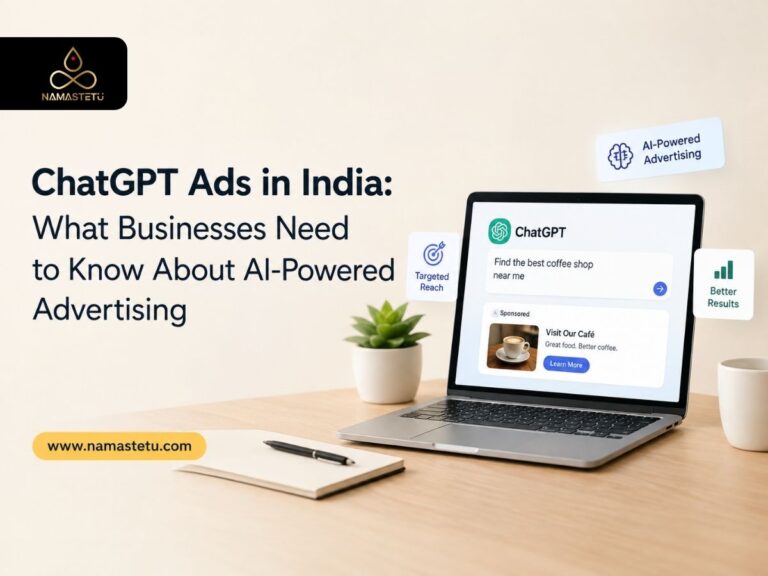
ChatGPT Ads are sponsored cards that show up when a conversation is relevant to a product or service. They appear at the bottom of an answer and are always separate from the organic response. Say someone asks for help choosing a laptop for college. A relevant brand can appear under the answer, marked as an ad.
Why India? OpenAI calls India one of ChatGPT’s largest and most active markets, and says ads help fund broader access through free and lower-cost plans. The company announced its ad plans in January 2026, began testing in the US in February and then expanded to many other countries. India went live with more than 50 brands, supported by the agency partners WPP and
For years, paid discovery meant search results and social feeds. Now people ask one detailed question and get one detailed answer. That is why this launch says a lot about where AI advertising in India is heading.
How ChatGPT Ads Work in India
The mechanics are simple once you see them laid out.
- Placement: The ad sits below the answer. It is labelled and kept apart from the organic response.
- Trigger: The ad shows when the conversation is relevant to what you sell. These ads are triggered by conversational intent, not by keywords or demographics.
- Buying models: OpenAI has added cost-per-click buying next to cost-per-impression, and offers a Pixel and Conversions API to measure results.
- Reporting: Advertisers see summary numbers such as impressions and clicks.
- Access: Agencies handled the first wave. Since 4 September, the self-serve tool is open to anyone, with no agency required.
Think of it as conversational AI advertising. The user starts with a question in their own words, not a search keyword. So your ad has to feel like a helpful next step, not an interruption.
Who Sees These Ads, and Who Does Not
Your reach is defined by the plan a user is on. That shapes who you can talk to.
- Sees ads: Logged-in adults on the Free and Go tiers.
- Does not see ads: Plus, Pro, Business, Enterprise and Education users.
- Also excluded: Users who identify as under 18, or whom the system predicts to be under 18.
- Sensitive areas: Ads are kept out of topics such as politics, health and mental health.
What does this mean for you? ChatGPT Ads for businesses in India suit everyday buying journeys: education, travel, apps, lifestyle products, software, home services and local shopping. Health and political advertisers face real limits, so check the platform rules before you plan.
Privacy: What Advertisers Actually Get
This part is worth reading twice, because it changes how you plan.
Advertisers do not receive users’ chats, histories, memories or personal details, and OpenAI says it does not sell user data. You cannot target a person based on a private conversation. You plan around topics, intent and the action you want after the click.
That design matters because AI-driven digital advertising has always had to earn trust. Clear labels and separate answers are how ChatGPT tries to keep people comfortable. For brands, the lesson is clear: be useful first, promotional second.
How Businesses Can Use ChatGPT Ads: A Simple Starting Plan
You do not need a big team to begin. You need a clear plan. Here is a starting path for how businesses can use ChatGPT Ads without wasting budget.
- Pick one goal. Early reporting says the launch options lean toward performance goals: leads, sales, app installs and sign-ups. Choose one.
- List the questions your buyers ask. Read your sales calls and inbox. The best prompts sound like real customers, not marketing slogans.
- Write a copy that sounds like an answer. State the benefit in plain words. Skip the hype. A clear next step beats a clever line.
- Send people to a focused page. If the ad promises a price comparison, the page should show one. A mismatch kills trust fast.
- Set up tracking first. Install the measurement tools before you spend. Without them, you are guessing.
- Start small and review weekly. Test two or three ad versions. Keep what works and pause what does not.
Good ChatGPT advertising is not a copy of your Google campaign. Search ads answer a typed query. These ads join a longer conversation, so shorter, more helpful messages tend to fit better. As with other AI advertising platforms, the first month is for learning, not for scaling.
Benefits of AI-Powered Advertising for Businesses
Why give this channel your attention at all? Here are the main benefits of AI-powered advertising for businesses, especially early on.
- You reach people mid-decision. Someone asking “which is better for my shop” is closer to buying than someone scrolling a feed.
- Entry can be light. Reports say the self-serve minimum was set low on purpose so small businesses can test.
- Measurement is built in. Clicks and conversions can be tracked, so you can judge results in plain numbers.
- Less crowding, for now. Fewer brands compete inside AI answers than in search results.
- You learn early. Teams that test now will know what works long before it becomes a crowded channel.
The honest view: AI-powered advertising is not a replacement for search or social. It is a new, high-intent channel you test next to the ones you trust.
How AI-Powered Advertising Can Improve Marketing Campaigns
Beyond reach, there is a bigger gain. The way you learn from how AI-powered advertising can improve marketing campaigns is what pays off long term.
- Sharper messaging. Ads tied to real questions push you to say what customers actually care about.
- Faster testing. You can compare versions quickly and drop weak ones within days.
- Better landing pages. Because the ad and the page must match, weak pages get exposed and fixed.
- Cleaner reporting. With conversion tracking, you connect spend to leads, not just clicks.
- Smarter budgets. What you learn here can feed your search and social plans too.
Strong AI-powered marketing campaigns work because they combine a good offer, a clear message and honest measurement. The tool helps, but the thinking still comes from you.
The Catch: A Paid Ad Is Not a Recommendation
Here is the point most launch coverage skips. Paying for a spot below the answer does not mean ChatGPT will name your brand inside the answer. The sponsored card and the AI’s answer come from separate systems, so your ad can appear while the answer recommends a competitor.
Being named in the answer is earned. It comes from clear, useful, well-structured content, real customer reviews and a consistent brand presence across the web. In simple terms, ChatGPT marketing has two halves: paid placement and organic trust. Winning brands work on both.
This is how we think about it at Namastetu Technologies. Paid tests give you quick data. Strong content, a solid website and honest reviews make answer engines more likely to mention you. If you are deciding whether to build this in-house or get help, this guide on choosing a digital marketing agency in Indore explains what to look for.
Common Mistakes to Avoid
- Copying your Google Ads text. Different channel, different tone.
- Sending traffic to your homepage. Use a page built for one action.
- Skipping tracking. No data means no learning.
- Expecting instant scale. Treat the first weeks as a test.
- Ignoring the rules. Sensitive categories are restricted, and normal advertising laws still apply.
- Forgetting organic visibility. An ad without a strong site behind it leaks trust.
Frequently Asked Questions About ChatGPT Ads
1. What are ChatGPT Ads in India?
They are labelled sponsored placements that appear below ChatGPT answers for logged-in adults on the Free and Go plans. They are separate from the answer itself and stay out of sensitive topics.
2. When did ChatGPT Ads launch in India?
The managed launch began on 27 August 2026 with agency partners WPP and Omnicom. The self-serve Ads Manager opened to Indian advertisers on 4 September 2026.
3. Who can see ChatGPT Ads?
Logged-in adults on the Free and Go plans. Plus, Pro, Business, Enterprise and Education users do not see them, and neither do users identified or predicted to be minors.
4. Can a small business run ChatGPT Ads?
Yes. Since the self-serve tool opened, businesses can create an account and launch campaigns without an agency. It still helps to start with one clear goal and a small test.
5. Do ChatGPT Ads change ChatGPT’s answers?
No, according to OpenAI. Ads are kept separate from responses and are clearly labelled.
6. Can advertisers see my private chats?
No. OpenAI says advertisers do not receive chats, histories, memories or personal details. They only see summary results such as impressions and clicks.
7. Will running ads make ChatGPT recommend my brand?
No. A paid ad and an organic recommendation are two different things. To be named in answers, you need strong, helpful content and a trusted brand presence.
8. Are ChatGPT Ads better than Google Ads?
Not better, just different. Treat them as an extra channel for people who are asking detailed questions, and test them alongside your current search and social campaigns.
Conclusion
ChatGPT Ads service in Indore opens a fresh way to meet customers while they are still deciding. The smart move is not to rush in or to ignore it. Run a small, well-tracked test, learn from real data and keep building the content and trust that make answer engines mention you for free.
At Namastetu Technologies, we help brands plan tests like this with clear goals, honest reporting and content that supports both paid and organic visibility.
Ready to try AI-powered advertising the smart way? Talk to our team about a plan built for your business, or explore our 360 digital marketing services to see how paid, SEO and content work together. Let’s turn this new channel into real leads for you.