Every SMM agency Indore business works with has faced the same reporting gap for years. You could see likes, comments, and watch time inside each platform’s own dashboard, but never how Google Search itself was sending people to that content. That gap has now closed, and this guide explains exactly how to use it.
What Changed: The Google Search Console 2026 Update Explained
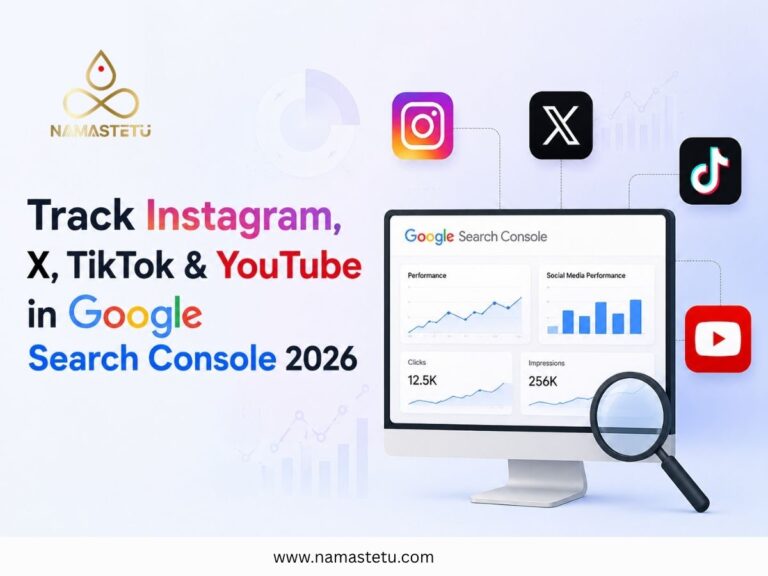
Google announced the update on its official Search Central Blog on 7 July 2026. The feature, called Platform Properties, lets creators and brands verify a social or video account instead of a website domain, then see how that account’s content performs in Google Search and Discover.
This is the most significant Google Search Console 2026 update aimed specifically at social content since the tool launched. For the first time, Search Console reports on content you do not host on your own website.
Why Social Media Marketing Indore Businesses Should Care
Most clients hiring a social media marketing Indore agency want proof that their content is actually being discovered, not just liked. Platform Properties gives agencies a Google-verified number to show exactly that: real search clicks and impressions tied to Instagram, TikTok, X, and YouTube content.
This turns “our content is performing well” from a vague claim into a specific, verifiable metric pulled straight from Google’s own systems. Any best social media marketing agency in Indore searches turn up should already be exploring how to add this to client reporting.
Which Platforms Can You Track Right Now?
At launch, four platforms are supported inside Google Search Console:
- TikTok
- X (formerly Twitter)
- YouTube
Facebook and LinkedIn are not part of this initial rollout. If a competitor claims full Facebook tracking through this feature already, that claim is not accurate as of this update.
How to Track Instagram Performance in Google Search Console
Tracking Instagram is one of the most requested use cases, since Reels and posts frequently appear in Google Search results. Here is the exact process:
- Open Google Search Console and sign in with the account linked to your Instagram profile.
- Click the property selector, then choose Add Property.
- Select the platform property type and choose Instagram.
- Complete the verification steps shown on screen to confirm account ownership.
- Wait 24 to 48 hours for the first performance data to populate.
Once verified, you can see exactly which search queries are driving traffic to specific Instagram posts, something that was previously invisible.
X (Twitter) Search Console Tracking: What You Can See
For X (Twitter) Search Console tracking, the process mirrors Instagram closely. Once verified, you get access to the same three core reports available to every platform property.
- Performance: clicks, impressions, average position, and the exact search queries involved.
- Insights: trending posts and content patterns worth repeating.
- Achievements: milestones such as rising clicks over a rolling 28-day period.
This means a brand can finally see if a specific post or thread is ranking for a real search term, rather than guessing based on retweets alone.
TikTok Analytics in Search Console: A New Layer of Data
TikTok analytics in Search Console fill a gap that native TikTok analytics never covered. TikTok’s own dashboard shows watch time, shares, and comments, but never how someone found that video through a Google Search.
Adding this layer matters most for social media marketing companies in Indore managing TikTok for local businesses, since many users now search Google for products and then land on a TikTok video shown in the results.
YouTube Search Console Integration: Deeper Than Before
YouTube Search Console integration builds on a feature Google tested in a more limited form back in 2025. Now, verified YouTube channels get the full performance report showing exactly which search queries drove clicks to specific videos.
This is particularly useful for social media management Indore teams running client YouTube channels, since it separates YouTube’s internal search traffic from traffic arriving specifically through Google Search.
Social Media Performance Analytics: Native Tools vs Search Console
The table below compares what native platform analytics show against what Google Search Console’s new social media performance analytics reveal.
| Data Point | Native Platform Analytics | Google Search Console Platform Properties |
| Likes, comments, shares | Yes | No |
| Watch time or engagement | Yes | No |
| Google Search queries driving clicks | No | Yes |
| Search impressions and average position | No | Yes |
| Works without owning a website | Depends on platform | Yes |
| Cost | Free | Free |
The two tools are not competitors, they answer different questions. Native analytics show engagement after discovery, while Search Console now shows how that discovery happened through Google Search in the first place.
Google Search Console Insights: Reading the New Reports Correctly
Google Search Console Insights on a platform property should be read differently than a website property. A high impression count with a low click count on a video, for example, might mean the content is showing up for the right searches but the thumbnail or title needs improvement.
Reviewing this data monthly, alongside your usual content calendar, turns raw numbers into actual content decisions instead of just a report to glance at once and forget.
Social Platform Indexing: Does This Affect Search Rankings?
A common misunderstanding is that social platform indexing through this feature will boost search rankings. It will not. Platform Properties is purely a reporting tool, showing how content already performs in Search, not a way to influence how Google indexes or ranks that content.
Website ranking factors remain completely separate from this feature. Do not expect a verified Instagram account to change how your actual website ranks in Google.
Website and Social Profile Visibility: Using Both Together
The strongest strategy combines website and social profile visibility data side by side. If your website’s Search Console property shows strong traffic from a certain topic, and your Instagram property shows search clicks on related content, that overlap points to a topic worth doubling down on across every channel.
This cross-channel view is exactly the kind of insight a full-service Digital Marketing Agency in Indore should be building into monthly strategy reviews, not just isolated platform reports.
A Simple Framework: The Three-Report Check
Our team uses a simple monthly framework across every client account with a platform property verified, which we call the Three-Report Check:
- Check the Performance report for the top three queries driving clicks that week.
- Check the Insights report for any content pattern repeating across top performers.
- Check the Achievements report for milestones worth mentioning in client updates.
This keeps reporting focused on decisions rather than raw numbers, and it takes under fifteen minutes per account once you know where to look.
Common Mistakes to Avoid
- Assuming this feature will improve website search rankings directly.
- Verifying a personal account instead of a business or creator account, which can limit available data.
- Ignoring the data during the first 48 hours instead of waiting for it to populate fully.
- Treating platform properties as a replacement for your website’s own Search Console property, rather than a complement to it.
- Claiming Facebook support before Google officially confirms it for this feature.
FAQs About Social Media Makreting
1. What is the Google Search Console 2026 update for social media?
It is a new property type called Platform Properties, letting you verify Instagram, TikTok, X, or YouTube accounts to see their Google Search performance.
2. How do I track Instagram performance in Google Search Console?
Add a new property, choose the platform type, select Instagram, complete verification, then wait 24 to 48 hours for data to appear.
3. Can I track Facebook in Google Search Console yet?
No, not currently. Only Instagram, TikTok, X, and YouTube are supported in this initial 2026 rollout.
4. Does this feature improve my social media SEO rankings?
No. It is a reporting tool showing existing performance, not a feature that changes how Google indexes or ranks your content.
5. What data can I see for a verified YouTube channel?
You can see clicks, impressions, average position, and the specific search queries driving traffic to individual videos.
6. Is Google Search Console social media tracking free to use?
Yes. Verifying a platform property and viewing its reports costs nothing, just like standard website Search Console access.
7. How is this different from native TikTok or Instagram analytics?
Native analytics show engagement after discovery, like likes and watch time, while Search Console shows how people found the content through Google Search.
8. Should a social media marketing agency use this for client reports?
Yes. It gives agencies a Google-verified way to show real search visibility, strengthening client reporting beyond engagement metrics alone.
Conclusion:
Google Search Console’s 2026 Platform Properties update changes how businesses and agencies measure social media success. Instead of relying only on likes, comments, and engagement metrics, brands can now understand how Google Search drives visibility to their social content. For a social media marketing Indore agency, this creates a new opportunity to deliver transparent, data-driven reports and improve content strategies. By combining native platform analytics with Search Console insights, businesses can identify high-performing content, understand audience behavior, and strengthen their overall digital presence. Adopting this update early can help brands stay ahead in the evolving search and social media landscape.