
Why do some businesses successfully turn website visitors into paying customers while others struggle to generate enquiries despite investing in marketing? The answer may lie in how well they understand their customers.
Imagine someone searching Google for a digital marketing agency. They visit your website, explore your services, check customer reviews, follow your social media pages, and eventually contact your sales team. Every interaction influences their decision.
However, if your website provides confusing information, your enquiry form is difficult to use, or your sales team responds too late, that potential customer might choose a competitor.
This is where Customer Journey Mapping becomes important. It helps businesses understand how customers discover, evaluate, purchase, and interact with their products or services.
Instead of focusing only on website traffic or advertising clicks, businesses can examine the complete customer experience and identify opportunities to improve it.
In this guide, you will learn how to create a customer journey map, identify important touchpoints, understand customer behaviour, and use practical strategies to achieve better marketing results.
What Is Customer Journey Mapping?
Customer Journey Mapping is the process of visually documenting every interaction a customer has with a business, from discovering a brand to making a purchase and becoming a loyal customer.
It helps businesses understand what customers do, where they interact with a brand, what they expect, and which challenges influence their purchasing decisions.
For example, someone looking for website development services might discover your company through Google, visit your website, compare service packages, check customer reviews, and submit an enquiry. After speaking with your sales team, they may decide to purchase your services.
A customer journey map connects these interactions into one clear picture.
According to Nielsen Norman Group, effective journey maps help businesses understand customer actions, thoughts, and emotions throughout an experience.
Why Is Customer Journey Mapping Important?
Customers rarely make purchasing decisions after a single interaction. They may visit your website several times, compare competitors, read reviews, and engage with social media content before contacting your business.
Salesforce research reports that 80% of customers consider the experience a company provides as important as its products and services.
Customer journey mapping helps businesses:
- Understand customer behaviour: Discover how people find and interact with your brand.
- Identify marketing gaps: Find out where potential customers lose interest.
- Improve customer experience: Remove confusing steps and communication barriers.
- Align marketing and sales: Help teams understand customer expectations.
- Increase conversions: Identify opportunities to generate more enquiries and purchases.
- Build customer loyalty: Improve post-purchase communication and encourage repeat business.
The objective is to make every important customer interaction convenient, relevant, and consistent.
Understanding the Five Stages of a Customer Journey
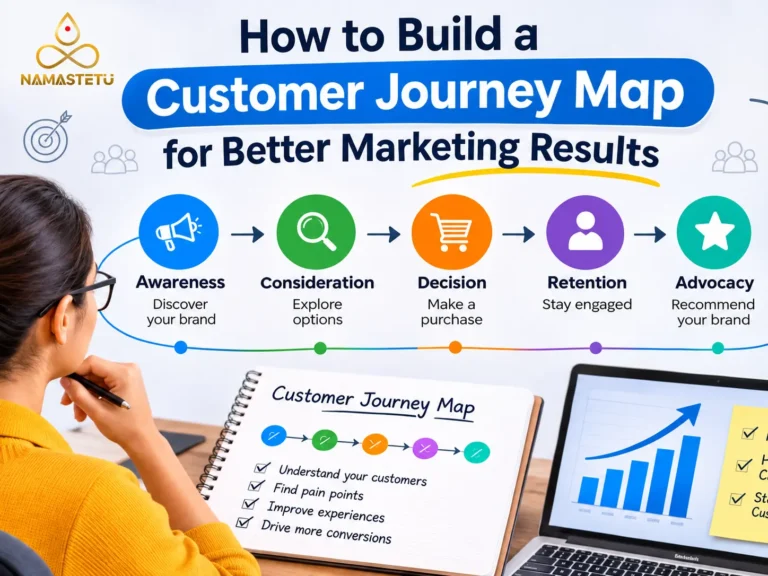
A customer journey typically includes five stages, from discovering a business to recommending it to others.
1. Awareness Stage
Customers discover your business through Google, social media, blogs, advertisements, or recommendations.
Marketing approach: Use SEO, educational content, and brand awareness campaigns to attract potential customers.
2. Consideration Stage
Customers research your products or services, compare competitors, and read reviews before making a decision.
Marketing approach: Share informative blogs, case studies, testimonials, and detailed service pages to build trust.
3. Decision Stage
Customers evaluate their final options based on pricing, service quality, and reliability.
Marketing approach: Offer clear calls to action, transparent pricing, and responsive sales support.
4. Retention Stage
After purchasing, customers expect continued support and a positive experience.
Marketing approach: Provide helpful onboarding, regular updates, and personalised communication to encourage repeat business.
5. Advocacy Stage
Satisfied customers recommend your business to friends, colleagues, and others.
Marketing approach: Encourage genuine reviews, testimonials, and referrals.
Understanding these stages helps businesses improve the complete customer experience and build long-term relationships.
How to Create a Customer Journey Map: 7 Practical Steps
Building a customer journey map does not require expensive software. Start with clear business goals, customer research, and website analytics.
Step 1: Define Your Business Goals
Identify what you want to improve, such as website enquiries, conversion rates, customer retention, or shopping cart abandonment.
For example, if your website receives traffic but generates few enquiries, focus on identifying problems between the first visit and form submission. Set measurable KPIs to track improvements.
Step 2: Identify Your Target Audience
Understand your customers’ needs, challenges, budgets, and purchasing motivations. Create customer personas based on:
- Industry, business size, and location.
- Goals and challenges.
- Preferred communication channels.
- Purchasing motivations and objections.
For example, a startup founder may prioritise affordability, while a marketing manager may value technical expertise and long-term support.
Step 3: Collect Customer Data
Use real customer information rather than assumptions to understand buying behaviour. Useful data sources include:
- Google Analytics 4: Track website traffic, engagement, and conversions.
- Google Search Console: Identify search queries and organic landing pages.
- CRM platforms: Review leads, sales conversations, and follow-ups.
- Customer surveys: Understand expectations and common problems.
- Social media insights: Identify engaging content and campaigns.
- Customer support records: Discover recurring customer issues.
Combining these sources gives you a clearer view of the customer journey.
Step 4: Identify Every Customer Touchpoint
A touchpoint is any interaction between a customer and your business. Common examples include:
- Search engines: Discovering your business through Google.
- Website: Exploring products and services.
- Social media: Engaging with posts and advertisements.
- Email marketing: Receiving newsletters and offers.
- Paid advertising: Clicking advertisements.
- Sales team: Discussing requirements and pricing.
- Customer support: Receiving post-purchase assistance.
Also include phone calls, consultations, store visits, and personal recommendations where relevant.
Step 5: Understand Customer Emotions and Pain Points
Identify what customers think, feel, and experience during their interactions with your business.
Common pain points include slow website loading, confusing navigation, unclear service information, missing testimonials, delayed responses, and complicated checkout processes.
Use customer feedback, surveys, and analytics to identify recurring problems that may prevent conversions.
Step 6: Visualise the Customer Journey
Organise your findings into a simple visual map. Include journey stages, customer actions, touchpoints, emotions, pain points, improvement opportunities, and relevant performance metrics.
A spreadsheet or diagram is sufficient to help marketing, sales, and customer support teams understand the complete customer experience.
Step 7: Implement Changes and Measure Results
Turn your findings into practical improvements. Optimise marketing campaigns, improve website navigation, create relevant SEO content, and make sales follow-ups faster.
Track conversion rates, cost per lead, customer acquisition costs, retention rates, and customer satisfaction. Review your journey map regularly to keep it aligned with changing customer expectations.
Best Customer Journey Mapping Tools
The right tools make it easier to collect customer information, visualise interactions, and collaborate with different teams.
Here are five useful options:
1. Miro
Miro provides a collaborative workspace for creating visual customer journey maps, organising ideas, and conducting team workshops.
2. Lucidchart
Lucidchart helps businesses create structured diagrams, flowcharts, and customer journey maps.
3. HubSpot
HubSpot provides CRM and marketing automation capabilities to manage leads, customer interactions, and sales activities.
4. Google Analytics 4
Google Analytics 4 is a powerful analytics platform that helps businesses understand how visitors discover, navigate, and interact with their websites and apps. It collects event-based data, allowing marketers to analyse customer behaviour across different stages of the customer journey.
With GA4, businesses can track important activities such as page views, button clicks, form submissions, purchases, video engagement, and other meaningful interactions. These insights help identify which marketing channels attract visitors, which pages drive engagement, and where potential customers drop off before completing an action.
5. Hotjar
Hotjar offers heatmaps and session recordings that help businesses understand how visitors interact with website pages.
Which tool should you choose? Small businesses can start with Google Analytics 4 and a spreadsheet. Growing teams may benefit from Miro, Lucidchart, or HubSpot, depending on their requirements.
How Customer Journey Analysis Improves Marketing Results
Customer journey analysis helps businesses understand customer behaviour and identify areas for improvement.
For example, if a website receives traffic but few enquiries, review its landing pages, CTAs, and contact forms. If ads generate clicks but no sales, improve the messaging, pricing, and checkout experience.
Personalisation also matters. Gartner’s June 2025 research found that 53% of surveyed customers had negative personalisation experiences, highlighting the importance of relevant communication.
Regular journey analysis helps businesses improve SEO, advertising, website performance, and customer retention.
Common Customer Journey Mapping Mistakes to Avoid
Avoid these common mistakes when creating your map:
- Making assumptions: Use actual customer feedback and behavioural data.
- Ignoring post-purchase interactions: Include retention, onboarding, and customer support.
- Combining different audiences: Create separate maps for significantly different customer segments.
- Missing offline touchpoints: Include phone calls, consultations, and in-person interactions.
- Making the map complicated: Focus on important interactions and business objectives.
- Not measuring improvements: Track relevant KPIs and update your strategy based on results.
Avoiding these mistakes makes your customer journey map more practical and useful for business decisions.
Conclusion
Customer Journey Mapping helps businesses understand how customers discover, evaluate, purchase, and interact with their products or services.
By identifying customer touchpoints, analysing behaviour, understanding pain points, and improving communication, businesses can create better experiences and support stronger marketing performance.
You do not need an expensive platform or a large team to get started. Begin with one customer segment, document its journey, identify the biggest challenge, and implement measurable improvements.
Remember, successful marketing is not just about attracting more website visitors. It is about helping the right customers move confidently from discovery to purchase and eventually become loyal advocates.
Ready to improve your digital marketing performance?
Namastetu Technologies helps businesses strengthen their online presence through SEO, social media marketing, content marketing, website development, and performance-driven digital strategies.
Explore our digital marketing services or contact our team to discuss a strategy aligned with your business goals.
Frequently Asked Questions (FAQs)
1. What is customer journey mapping in marketing?
Customer journey mapping is the process of visually documenting the different stages and interactions customers experience when engaging with a business. It helps identify customer needs, pain points, and opportunities to improve marketing performance.
2. How do you create a customer journey map?
Define your business goals, identify your target audience, collect customer data, map journey stages and touchpoints, understand customer emotions, and implement improvements based on your findings.
3. What are the five stages of a customer journey?
The five commonly used stages are awareness, consideration, decision, retention, and advocacy. They represent how customers discover a business, evaluate its offerings, make purchases, and develop long-term relationships.
4. Which tools are best for customer journey mapping?
Popular customer journey mapping tools include Miro, Lucidchart, HubSpot, Google Analytics 4, and Hotjar. The best choice depends on your business requirements, budget, and team size.
5. How often should a business update its customer journey map?
Review your customer journey map quarterly or whenever significant changes occur in customer behaviour, products, marketing channels, or business processes.